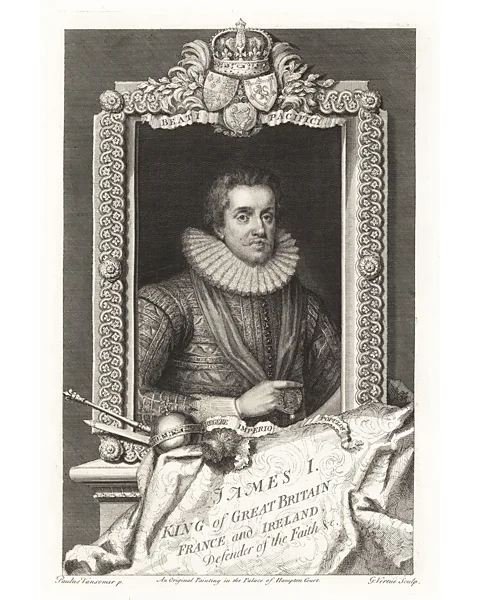
When King James was returning by sea to Scotland with his new wife Anne of Denmark, the voyage was plagued by bad weather – not unusual, for the famously choppy North Sea. But the king was convinced that the devil and his agents – the witches – had a hand in the storm. It was this belief of the king’s that sparked the 1563 Scottish Witchcraft Act, and subsequent witch hunts.
This article contains violent details some readers may find upsetting.
From the 1560s to the 1700s, witch-hunts ripped through Scotland, with at least 4,000 accused, and the executions of thousands of people. Along the way there was unspeakable torture, involving “pilliwinks” (thumbscrews), leg-crushing boots and the “witches’ bridle”, among other vicious and brutal methods.
 Alamy
AlamyIn Norway and the US – where witch hunts and trials of a similar scale took place during the same period – those who were executed have been memorialised. Now, in Scotland a new official tartan – which will be incorporated into kilts and other garments – has been released to honour the victims of the Witchcraft Act.